India +91 94223 00020abhay@splendidlab.comISO 17034:2016 · GLP certified
Imatinib is a potent tyrosine kinase inhibitor primarily indicated for the treatment of various malignancies, including chronic myeloid leukemia and gastrointestinal stromal tumors. It functions by blocking… Read more









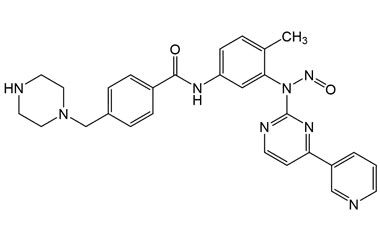



Imatinib is a potent tyrosine kinase inhibitor primarily indicated for the treatment of various malignancies, including chronic myeloid leukemia and gastrointestinal stromal tumors. It functions by blocking specific enzymes that promote cancer cell growth, making it a critical component of modern oncology. Laboratories require high-quality reference standards of Imatinib, along with its related degradation products, synthetic intermediates, and pharmacopeial impurities, to ensure precise analytical testing and regulatory compliance. These compounds are essential for robust impurity profiling, helping to identify and quantify potential process-related or storage-induced contaminants. Furthermore, stable isotope labelled compounds are indispensable in advanced mass spectrometry applications, facilitating accurate method validation and quality control throughout the pharmaceutical development cycle. By utilizing these characterized reference materials, researchers can maintain the integrity of analytical methods and support the rigorous standards required for consistent pharmaceutical analysis.

