India +91 94223 00020abhay@splendidlab.comISO 17034:2016 · GLP certified
Adapalene is a third-generation topical retinoid utilized primarily in the treatment of acne vulgaris by normalizing follicular keratinization. As a potent modulator of epithelial cell differentiation,… Read more


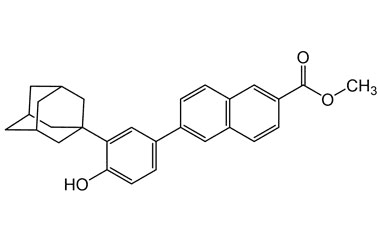


Adapalene is a third-generation topical retinoid utilized primarily in the treatment of acne vulgaris by normalizing follicular keratinization. As a potent modulator of epithelial cell differentiation, this vitamin A derivative is also employed off-label for skin conditions such as keratosis pilaris and rosacea. To support rigorous quality control and regulatory compliance, pharmaceutical laboratories utilize our comprehensive selection of reference standards. This collection includes the Adapalene API, along with pharmacopeial and non-pharmacopeial impurities essential for accurate impurity profiling and method validation. Additionally, the catalogue features stable isotope labelled compounds and metabolites, such as O-desmethyl adapalene and acyl-glucuronides, which are critical for quantitative analysis and mass balance studies. These high-quality reference materials enable consistent performance in stability testing and analytical method development, ensuring the safety and therapeutic efficacy of topical retinoid formulations throughout the product lifecycle.

