India +91 94223 00020abhay@splendidlab.comISO 17034:2016 · GLP certified
Betahistine dihydrochloride is a histamine H1 and H3 receptor agonist primarily used to treat vertigo, motion sickness, and vestibular disorders, including Ménière's disease. As an antiemetic and antihistamine,… Read more
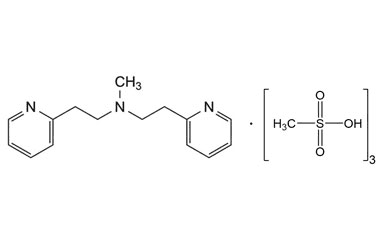
Betahistine dihydrochloride is a histamine H1 and H3 receptor agonist primarily used to treat vertigo, motion sickness, and vestibular disorders, including Ménière's disease. As an antiemetic and antihistamine, it functions by improving peripheral blood circulation and reducing fluid pressure within the inner ear. The selection of betahistine dihydrochloride reference standards and related impurities provided here supports precise quality control and rigorous analytical testing. These compounds are essential for impurity profiling during method validation, allowing laboratories to accurately identify and quantify degradation products and process-related substances. By utilizing high-quality reference materials, including specific impurity salts, pharmaceutical researchers can ensure the stability and safety of the drug substance. These standards are vital for regulatory compliance and developing reliable analytical methods for the evaluation of betahistine dihydrochloride in various pharmaceutical formulations.