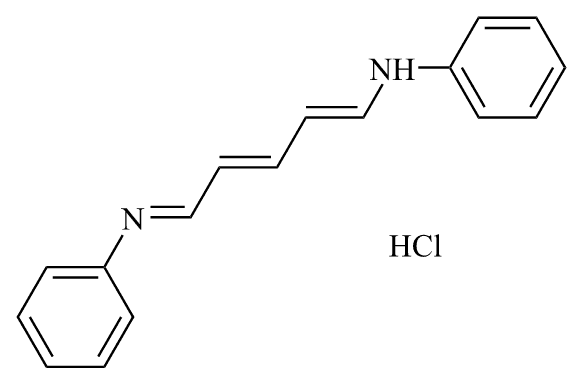
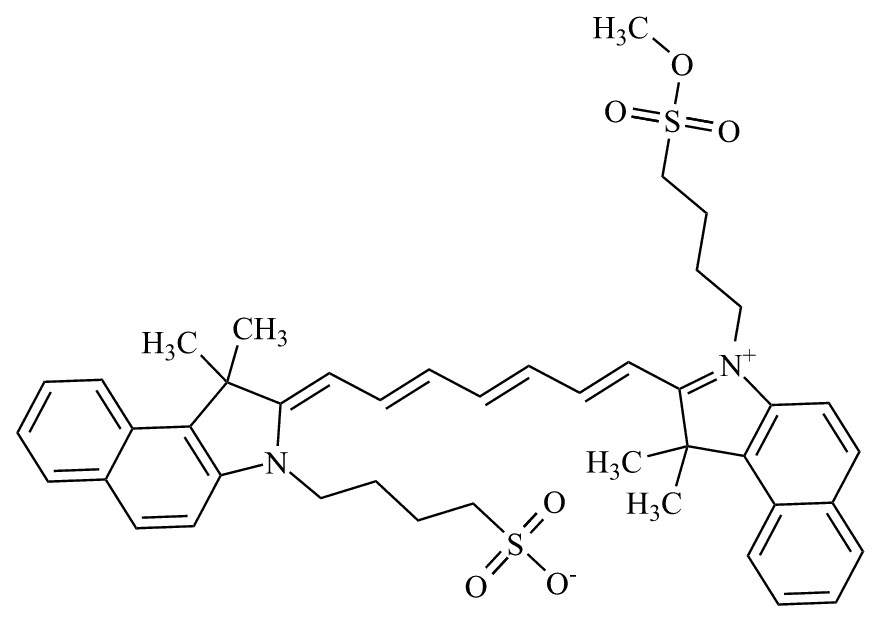
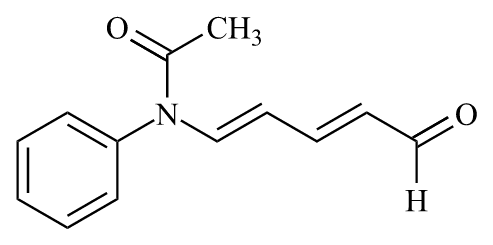
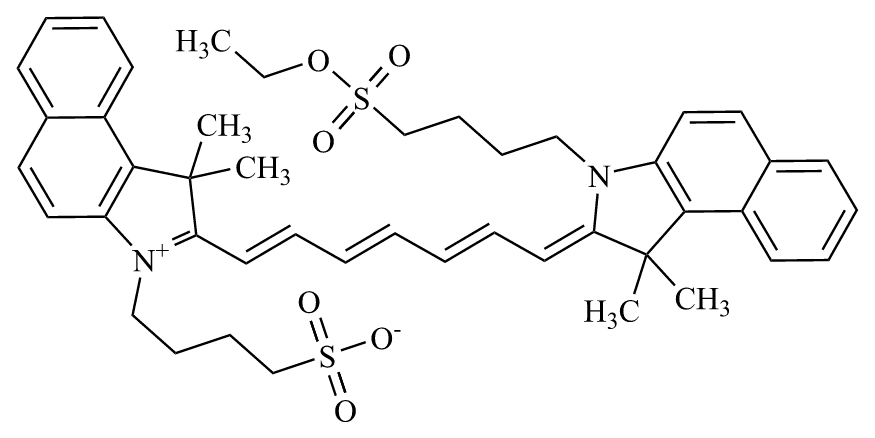
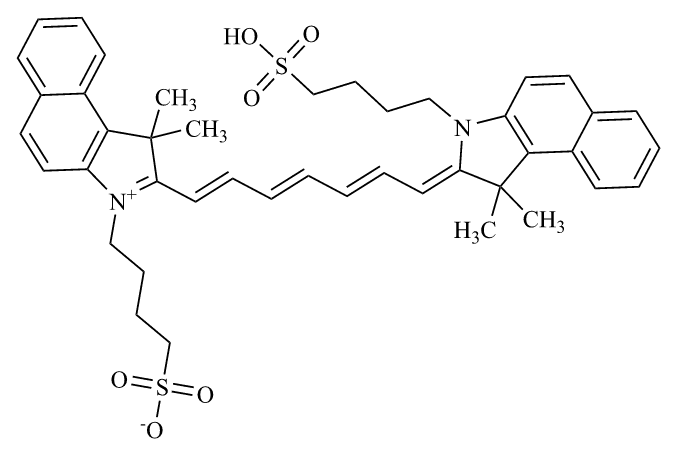
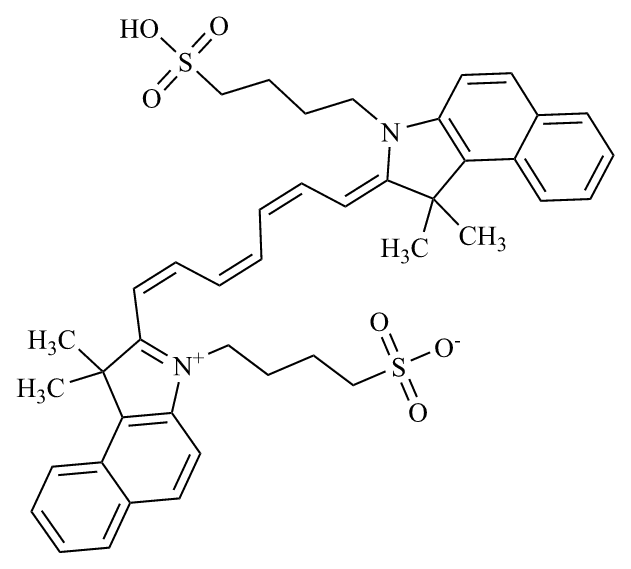
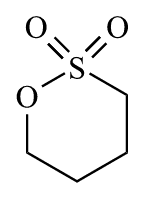
Indocyanine green is a tricarbocyanine dye utilized as a diagnostic agent for medical imaging. It is primarily employed in clinical diagnostics to assess hepatic function, cardiac output, and gastric blood… Read more
![Chemical structure of 1,1,2-trimethyl-1H-benzo[e]indole (BSC)](/_next/image?url=https%3A%2F%2Fassets.splendidlab.com%2F41532-84-7-112-trimethyl-1H-benzoeindole-BSC.png&w=3840&q=75)
![Chemical structure of 1,1,2-Trimethyl-3-(4-sulfobutyl)benz[e]indolium Inner Salt](/_next/image?url=https%3A%2F%2Fassets.splendidlab.com%2F63149-24-6-112-Trimethyl-3-4-sulfobutylbenzeindolium-Inner-Salt.png&w=3840&q=75)


![Chemical structure of 2,3,3-Trimethyl-3H-benzo[f]indole](/_next/image?url=https%3A%2F%2Fassets.splendidlab.com%2F52568-84-0-233-Trimethyl-3H-benzofindole.png&w=3840&q=75)

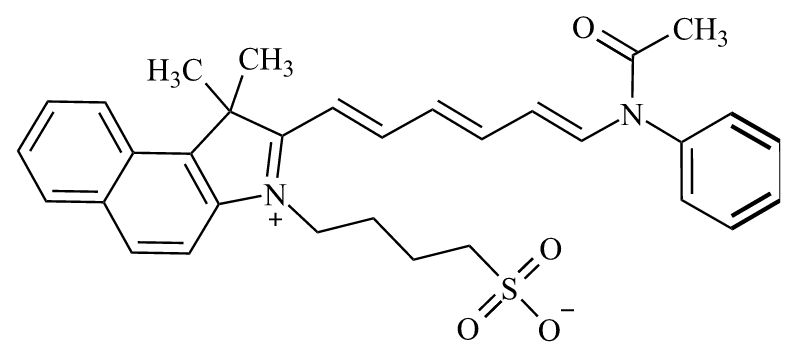
![Chemical structure of 2-[6-(Acetylphenylamino)-1,3,5-hexatrienyl]-1,1-dimethyl-3-sulfobutyl-1H-benz[e]indolium Inner Salt](/_next/image?url=https%3A%2F%2Fassets.splendidlab.com%2F63450-66-8-2-6-Acetylphenylamino-135-hexatrienyl-11-dimethyl-3-sulfobutyl-1H-benzeindolium-Inner-Salt.png&w=3840&q=75)
![Chemical structure of 4-(2-((1E,3E,5E,7E)-7-(3-(4-(Methoxysulfonyl)butyl)-1,1-dimethyl-1,3-dihydro-2H-benzo[e]indol-2-ylidene)hepta-1,3,5-trien-1-yl)-1,1-dimethyl-1H-benzo[e]indol-3-ium-3-yl)butane-1-sulfonate](/_next/image?url=https%3A%2F%2Fassets.splendidlab.com%2F1201170-49-1-4-2-1E3E5E7E-7-3-4-Methoxysulfonylbutyl-11-dimethyl-13-dihydro-2H-benzoeindol-2-ylidenehepta-135-trien-1-yl-11-dimethyl-1H-benzoeindol-3-.png&w=3840&q=75)


![Chemical structure of Sodium 4-(1,1-dimethyl-2-oxo-1,2-dihydro-3H-benzo[e]indol-3-yl)butane-1-sulfonate](/_next/image?url=https%3A%2F%2Fassets.splendidlab.com%2F2776202-53-8-Sodium-4-11-dimethyl-2-oxo-12-dihydro-3H-benzoeindol-3-ylbutane-1-sulfonate.png&w=3840&q=75)

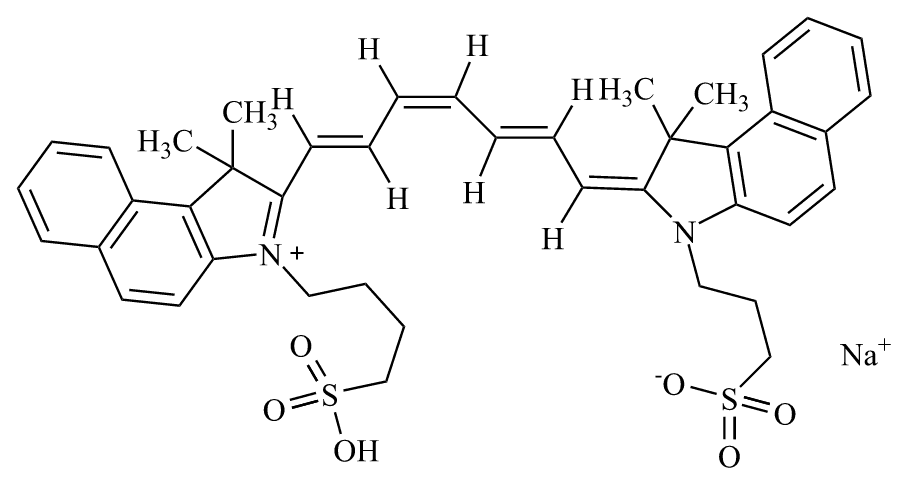
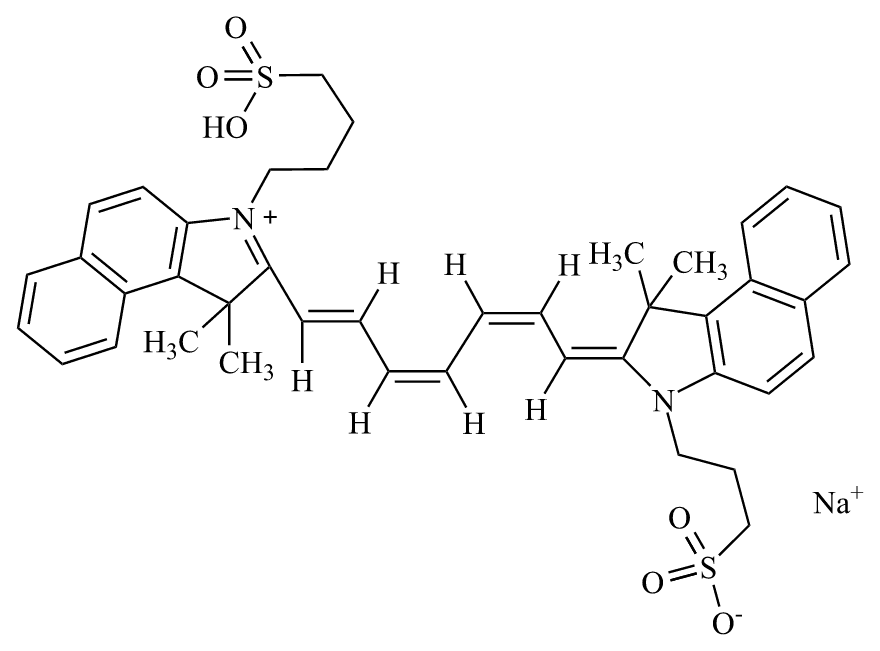
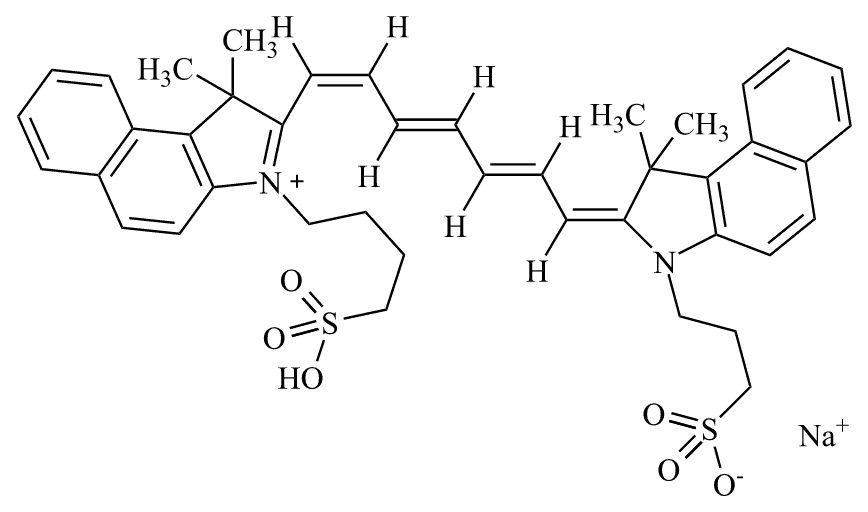
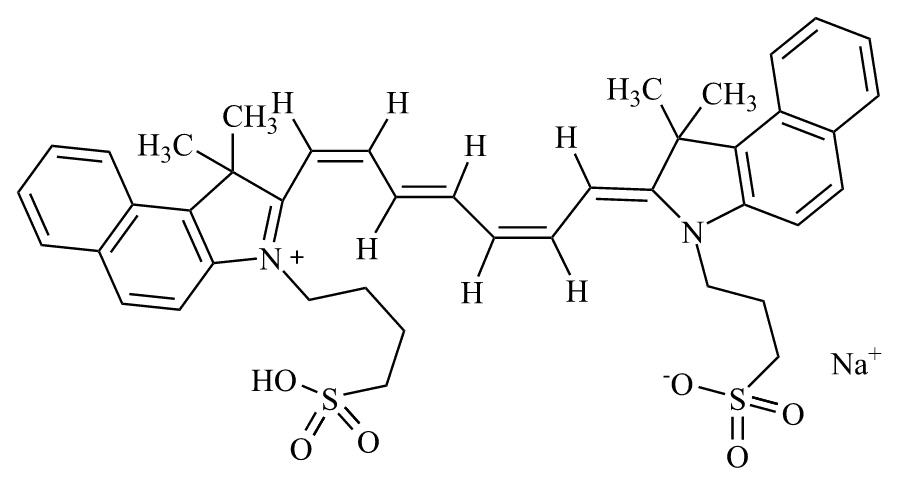
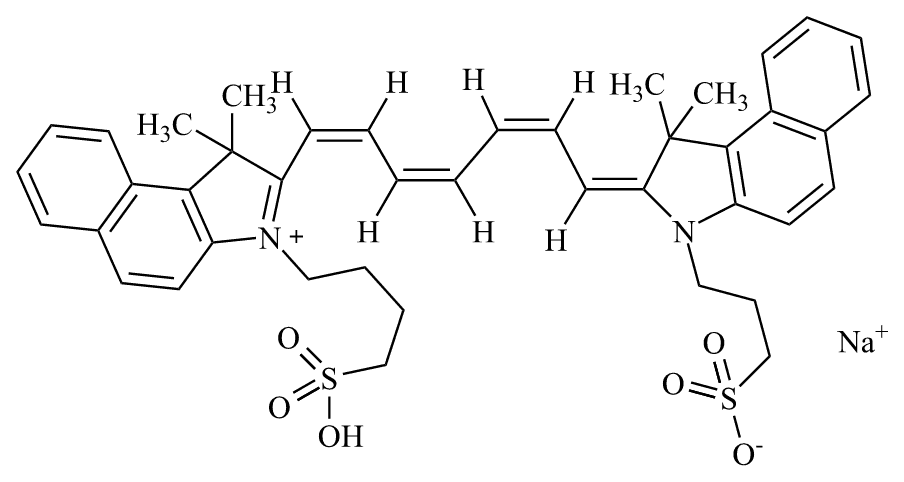
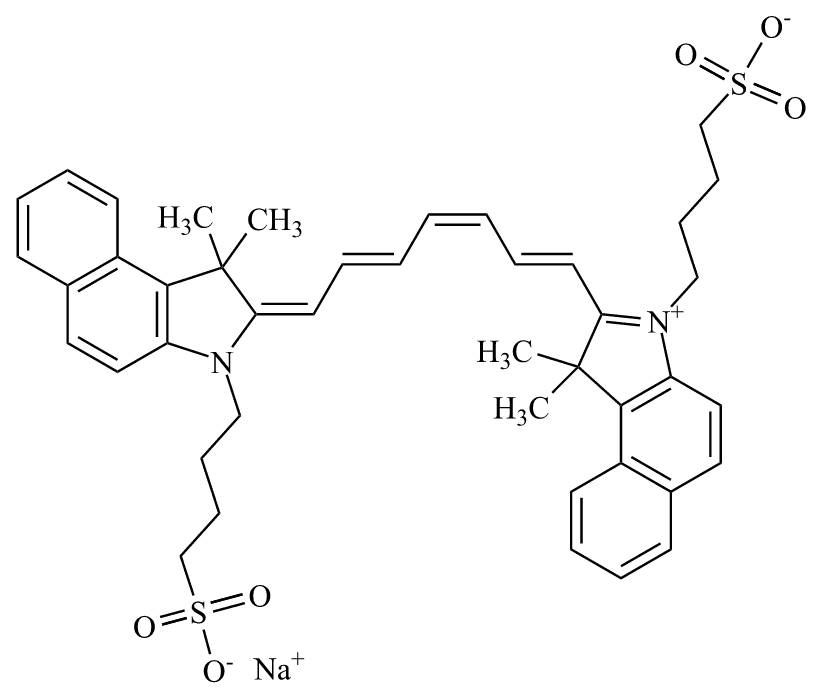
Indocyanine green is a tricarbocyanine dye utilized as a diagnostic agent for medical imaging. It is primarily employed in clinical diagnostics to assess hepatic function, cardiac output, and gastric blood flow, as well as for ophthalmic angiography. This category comprises essential reference standards, including the active pharmaceutical ingredient, its pharmacopeial and non-pharmacopeial impurities, and stable isotope labelled compounds. These materials are critical for pharmaceutical laboratories conducting rigorous impurity profiling and method validation. Laboratories rely on these high-quality standards to ensure the accuracy of analytical testing and to maintain stringent quality control protocols during drug substance development. By utilizing these characterized substances, researchers can reliably identify and quantify related compounds within the drug matrix, supporting compliance with regulatory standards throughout the product lifecycle.