India +91 94223 00020abhay@splendidlab.comISO 17034:2016 · GLP certified
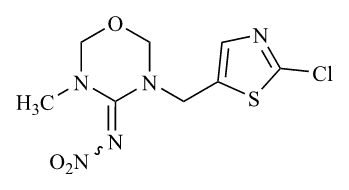
Thiamethoxam is a systemic neonicotinoid insecticide widely utilized in agriculture for the control of various sucking and soil-dwelling pests. It functions by acting as an agonist on the insect nicotinic… Read more
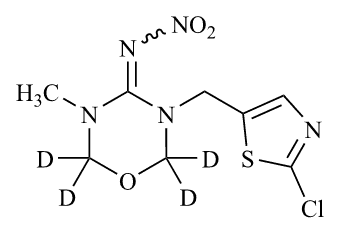
Thiamethoxam is a systemic neonicotinoid insecticide widely utilized in agriculture for the control of various sucking and soil-dwelling pests. It functions by acting as an agonist on the insect nicotinic acetylcholine receptors, effectively disrupting the central nervous system to provide broad-spectrum protection for crops. Laboratories utilize this collection of reference standards, including the active pharmaceutical ingredient, to support rigorous analytical testing and quality control protocols. The inclusion of specified impurities facilitates comprehensive impurity profiling, allowing researchers to monitor product degradation and synthesis byproducts during stability studies. Furthermore, stable isotope labelled compounds are available as internal standards for mass spectrometry-based methods, ensuring high precision in quantifying residues in complex environmental and food matrices. These tools are essential for maintaining adherence to regulatory standards and ensuring accurate method validation throughout the product lifecycle.