India +91 94223 00020abhay@splendidlab.comISO 17034:2016 · GLP certified
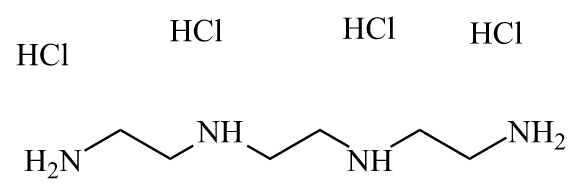
Trientine Tetrahydrochloride is a chelating agent belonging to the triethylenetetramine class, primarily indicated for the treatment of Wilson’s disease in patients aged five and older. By binding to excess… Read more
Trientine Tetrahydrochloride is a chelating agent belonging to the triethylenetetramine class, primarily indicated for the treatment of Wilson’s disease in patients aged five and older. By binding to excess copper ions and facilitating their excretion, this medication addresses the toxic copper accumulation in the liver and brain associated with this genetic condition. Laboratories analyzing this pharmaceutical require high-quality reference standards, including pharmacopeial and non-pharmacopeial impurities, metabolites, and stable isotope-labelled compounds, to ensure rigorous quality control. These analytical tools are essential for impurity profiling, method validation, and accurate quantification during stability testing and routine drug analysis. By utilizing these specialized compounds, researchers can precisely identify degradation products and ensure the therapeutic consistency and safety of the parent drug in various formulations.